Lean on Me (for Lipids): Metabolic Synergy Between Staphylococcus aureus and Enterococcus faecalis During Polymicrobial Infection
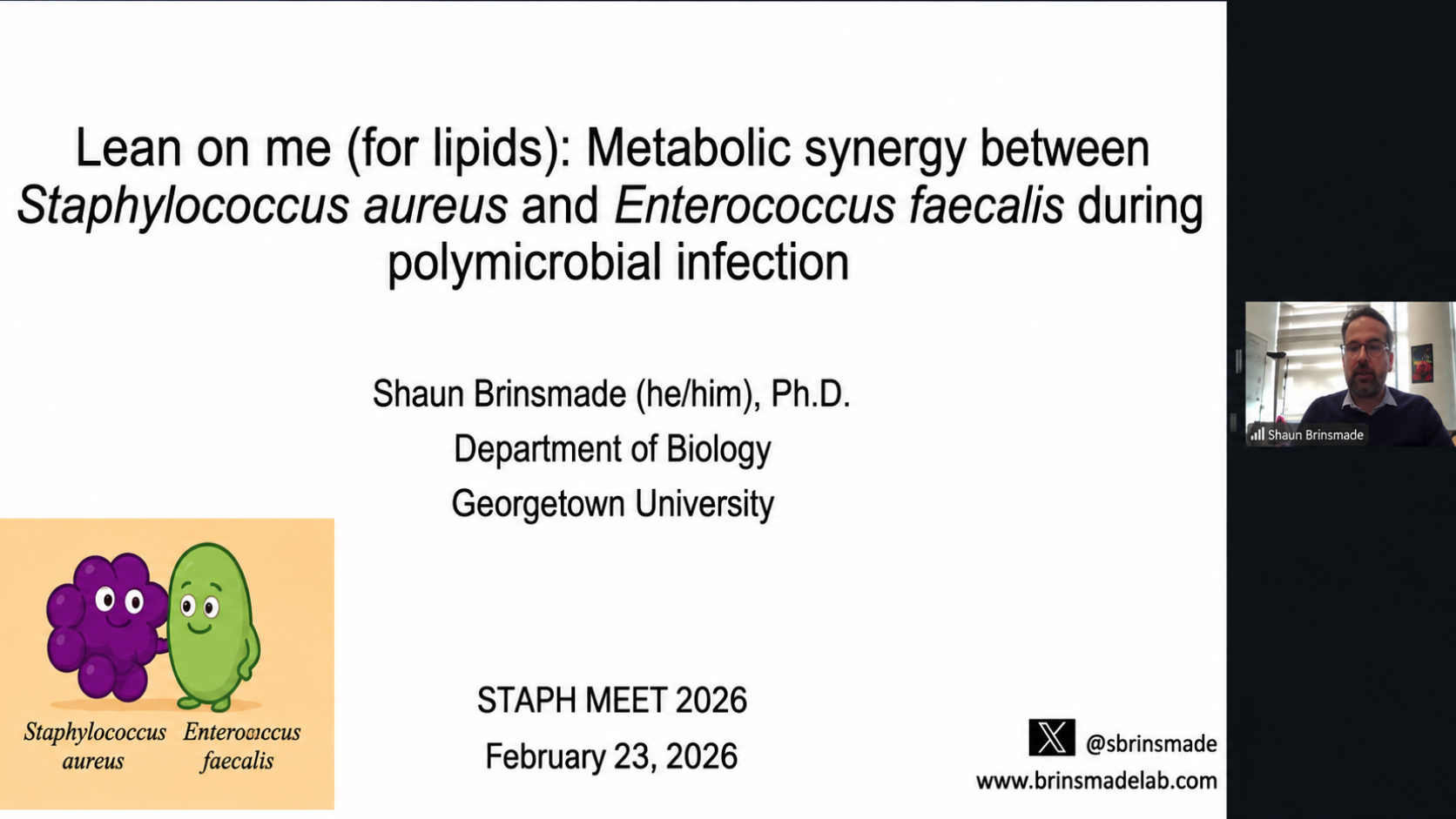
🔴 One of the featured presentations during Session 3 of the 2nd International Virtual Conference on Staphylococci and Staphylococcal Infections 2026 featured Dr. Shaun R. Brinsmade from Georgetown University (USA), who delivered an insightful lecture on Lean on Me (for Lipids): Metabolic Synergy Between Staphylococcus aureus and Enterococcus faecalis During Polymicrobial Infection.
Many bacterial infections are not caused by a single pathogen but instead involve complex microbial communities in which different bacterial species interact and influence one another. Staphylococcus aureus and Enterococcus faecalis are frequently isolated together from chronic wounds, diabetic foot ulcers, and other healthcare-associated infections. Rather than competing, these organisms can engage in metabolic cooperation, exchanging nutrients and metabolic intermediates that enhance bacterial survival, persistence, and tolerance to environmental stress. Understanding these polymicrobial interactions is becoming increasingly important for explaining why mixed-species infections are often more difficult to eradicate than infections caused by a single pathogen.
During his presentation, Dr. Brinsmade discussed how lipid metabolism contributes to metabolic synergy between S. aureus and E. faecalis during polymicrobial infection. The lecture highlighted how interactions between these organisms influence bacterial physiology and adaptation, providing new insight into the metabolic networks that support survival within the host. These findings demonstrate that bacterial metabolism extends beyond individual species and is shaped by neighboring microorganisms, offering a broader understanding of how polymicrobial communities contribute to infection biology.
Dr. Brinsmade’s research focuses on the intersection of bacterial metabolism, gene regulation, and pathogenesis in Gram-positive bacteria, particularly Staphylococcus aureus. His laboratory investigates how metabolic regulatory systems coordinate nutrient sensing, lipid metabolism, and virulence, with the goal of understanding how bacteria transition from harmless colonizers to invasive pathogens. By integrating molecular microbiology, bacterial genetics, and systems biology, his work continues to uncover regulatory mechanisms that may serve as promising targets for future antimicrobial and anti-virulence therapies.
The presentation generated significant interest among conference participants, highlighting the growing recognition that successful treatment of chronic infections requires understanding not only individual pathogens but also the metabolic interactions occurring within polymicrobial communities. Continued investigation of bacterial cooperation and metabolic cross-feeding is expected to reveal novel therapeutic opportunities capable of disrupting microbial partnerships that promote persistence and disease.
Stay connected with StemX Media for more live scientific updates from the conference as leading experts share the latest advances in staphylococcal biology, antimicrobial resistance, host–pathogen interactions, and therapeutic development.
This conference is organized by Impact Research Communications (IRC)
More info: https://staph.ircconferences.net/ | Staphylococcus Science & Therapeutics