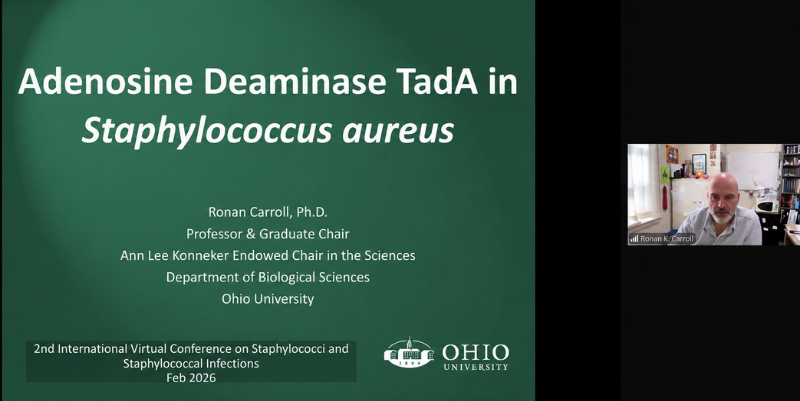
Adenosine Deaminase TadA in Staphylococcus aureus
🔴 One of the featured presentations during Session 6 (Day 2) of the 2nd International Virtual Conference on Staphylococci and Staphyloccal Infections 2026 featured Prof. Ronan Carroll from Ohio University (USA), who delivered an insightful lecture on Adenosine Deaminase TadA in Staphylococcus aureus.
RNA molecules undergo numerous chemical modifications that influence how genes are expressed and how bacterial cells adapt to changing environments. One of these modifications is adenosine-to-inosine (A-to-I) RNA editing, catalyzed by the enzyme tRNA-specific adenosine deaminase (TadA). While TadA has long been recognized for its essential role in maintaining accurate protein synthesis through tRNA editing, emerging research suggests that this enzyme also contributes to broader aspects of bacterial physiology, stress adaptation, and pathogenicity. Understanding how TadA influences Staphylococcus aureus biology may reveal previously unrecognized regulatory mechanisms and identify novel opportunities for antimicrobial intervention.
During his presentation, Prof. Carroll discussed the biological functions of adenosine deaminase TadA in Staphylococcus aureus. The lecture explored how RNA editing contributes to bacterial adaptation by influencing gene expression, cellular metabolism, and responses to environmental stress. The presentation highlighted the importance of post-transcriptional regulation in shaping bacterial physiology and demonstrated how enzymes involved in RNA modification may represent promising targets for future antimicrobial development. These findings provide new insight into the complex regulatory networks that enable S. aureus to survive and persist during infection.
Prof. Carroll’s research focuses on bacterial gene regulation, RNA biology, metabolism, and host-pathogen interactions in Staphylococcus aureus. His laboratory integrates molecular microbiology, bacterial genetics, RNA biology, and infection models to investigate how transcriptional and post-transcriptional regulatory mechanisms control bacterial adaptation, virulence, and stress tolerance. Through these studies, his group is expanding our understanding of RNA-mediated regulation and identifying molecular pathways that may serve as innovative therapeutic targets against persistent bacterial infections.
The presentation generated considerable interest among conference participants, highlighting the growing importance of RNA biology in microbiological research. Continued investigation of RNA editing enzymes such as TadA is expected to deepen our understanding of Staphylococcus aureus physiology while supporting the development of next-generation antimicrobial strategies that target bacterial regulatory systems rather than conventional cellular processes.
Stay connected with StemX Media for more live scientific updates from the conference as leading experts share the latest advances in staphylococcal biology, antimicrobial resistance, host-pathogen interactions, and therapeutic development.
This conference is organized by Impact Research Communications (IRC)
More info: https://staph.ircconferences.net/ | Staphylococcus Science & Therapeutics