Can cellular senescence in lung fibroblasts be a key driver of fibrosis?
Understanding how ageing-associated cellular changes contribute to persistent tissue scarring could reveal new approaches to preventing or treating fibrotic lung disease.
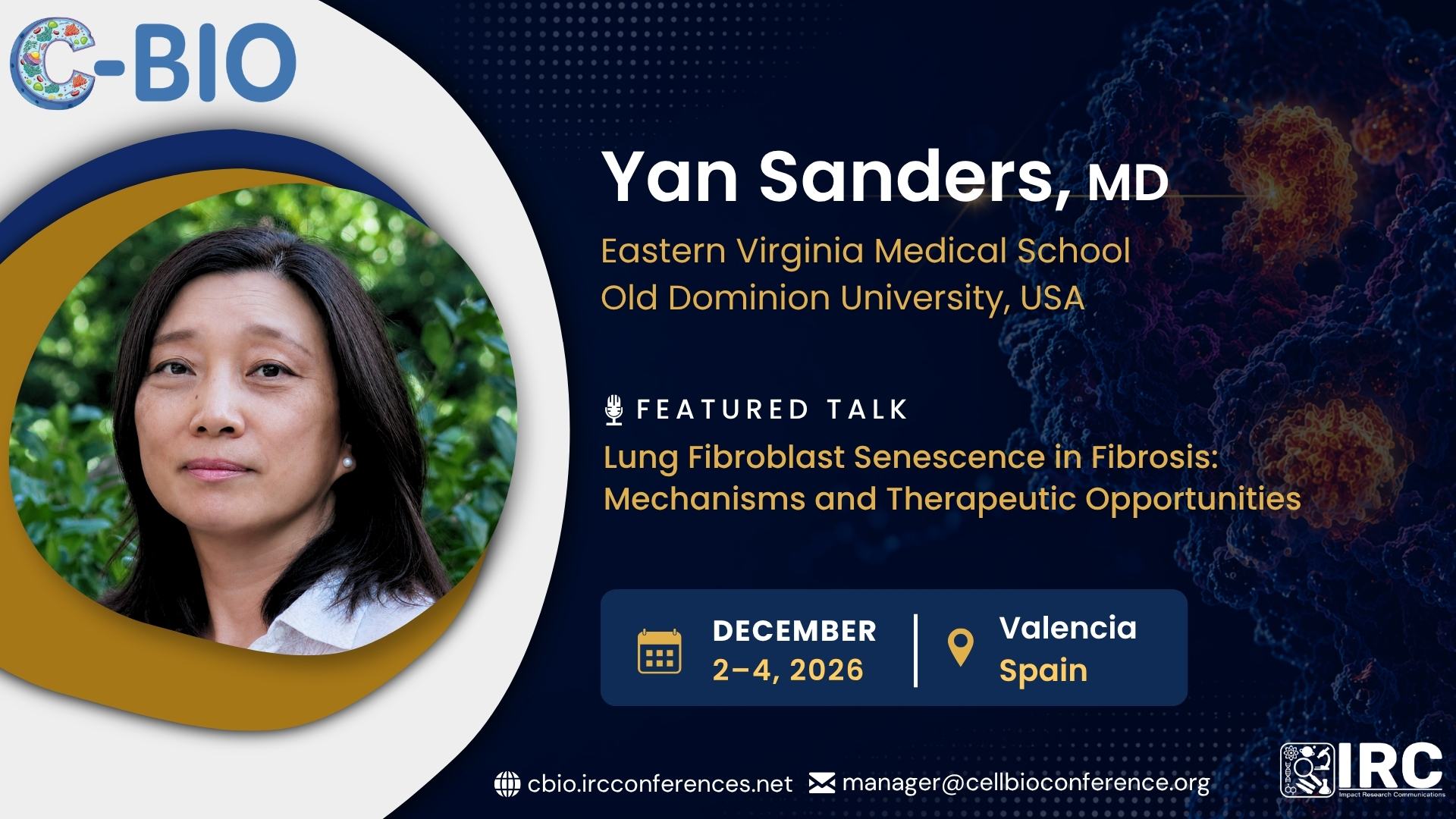
We are pleased to welcome Dr. Yan Sanders, Professor in the Department of Biomedical and Translational Sciences at Eastern Virginia Medical School, Old Dominion University, USA, as a speaker at the International Conference on Cell Biology (C-BIO 2026).
Valencia, Spain | December 2–4, 2026
https://cbio.ircconferences.net/
This presentation will explore how fibroblast senescence contributes to the development and progression of pulmonary fibrosis. Dr. Sanders will discuss the cellular and molecular mechanisms that drive senescent fibroblast phenotypes and their effects on the tissue microenvironment, highlighting potential opportunities for therapeutic intervention.
Dr. Sanders is a researcher in biomedical and translational sciences whose work focuses on cellular mechanisms underlying tissue injury, repair, and fibrosis. His research bridges fundamental cell biology with disease mechanisms to identify pathways that may be targeted for therapeutic development.
His research investigates fibroblast biology, cellular senescence, tissue remodeling, and mechanisms of fibrosis, with a particular focus on the lung. By examining how senescent cells influence their surrounding microenvironment, his work aims to identify mechanisms that contribute to persistent fibrosis and uncover new strategies for restoring tissue function.
Join us at C-BIO 2026 to explore emerging insights into cellular senescence, fibroblast biology, and the mechanisms driving fibrotic disease.
More Info:
Cell Biology Research Network:- https://cbio.ircconferences.net/ | https://www.linkedin.com/company/cell-biology-research-network/
Impact Research Communications:- https://impactresearchcommunications.org/ | https://www.linkedin.com/company/impactresearchcommunications/