Exposure to Human Serum Promotes Innate Immune Evasion in Staphylococcus aureus
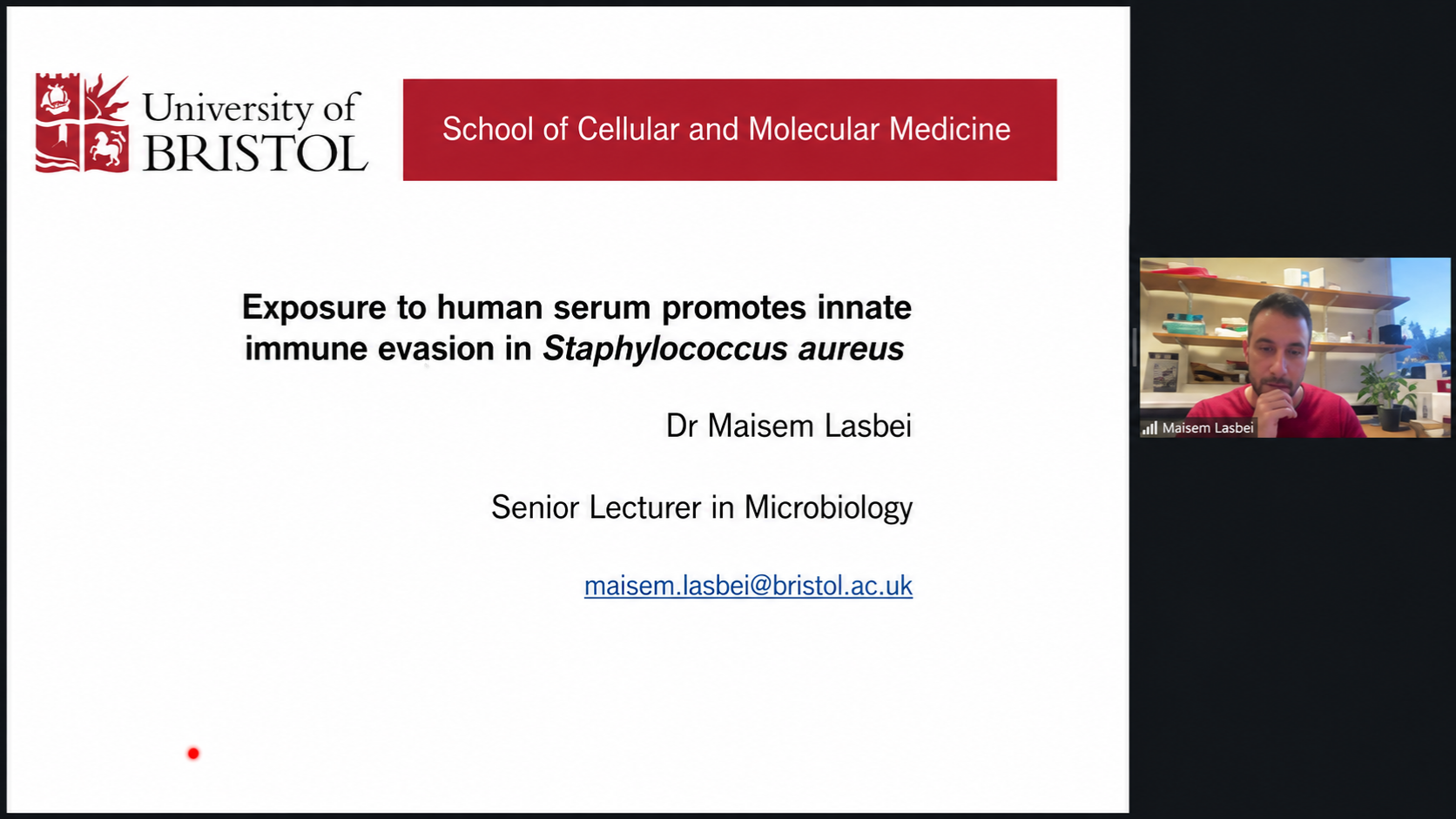
🔴 One of the featured presentations during Session 5 (Day 2) of the 2nd International Virtual Conference on Staphylococci and Staphylococcal Infections 2026 featured Dr. Maisem Laabei from the University of Bristol (United Kingdom), who delivered an insightful lecture on Exposure to Human Serum Promotes Innate Immune Evasion in Staphylococcus aureus.
Staphylococcus aureus is remarkably adept at surviving within the human host despite constant exposure to innate immune defenses. During bloodstream and tissue infections, the bacterium encounters human serum, a complex biological fluid containing complement proteins, antimicrobial peptides, antibodies, and other immune mediators that are designed to rapidly eliminate invading pathogens. Rather than simply resisting these defenses, S. aureus can rapidly alter its physiology and gene expression after serum exposure, enhancing its ability to evade immune recognition and persist within the host. Understanding these adaptive responses is essential for developing new strategies to prevent invasive staphylococcal disease.
During his presentation, Dr. Laabei discussed how exposure to human serum promotes innate immune evasion in Staphylococcus aureus. The lecture explored the molecular and regulatory changes that occur when the bacterium encounters the host bloodstream, demonstrating how environmental signals trigger adaptive responses that improve bacterial survival. These findings provide important insight into the mechanisms that enable S. aureus to withstand immune attack, establish persistent infections, and contribute to disease progression. By understanding these host-induced adaptations, researchers may identify new therapeutic strategies that interfere with bacterial immune evasion rather than relying exclusively on conventional antimicrobial agents.
Dr. Laabei’s research focuses on the genetic diversity, evolution, and pathogenesis of Staphylococcus aureus, with particular emphasis on how environmental conditions shape bacterial virulence and host interactions. His laboratory integrates microbial genomics, transcriptomics, experimental evolution, and infection models to investigate how bacterial populations adapt to different host niches and respond to immune pressures. This work is improving our understanding of host-pathogen interactions and helping identify molecular pathways that may serve as future targets for anti-virulence therapies.
The presentation generated considerable interest among conference participants, highlighting the importance of studying bacterial adaptation within the host environment. Continued investigation of serum-induced physiological changes and immune evasion mechanisms is expected to advance our understanding of Staphylococcus aureus pathogenesis and support the development of innovative therapeutic approaches aimed at reducing bacterial persistence and improving patient outcomes.
Stay connected with StemX Media for more live scientific updates from the conference as leading experts share the latest advances in staphylococcal biology, antimicrobial resistance, host-pathogen interactions, and therapeutic development.
This conference is organized by Impact Research Communications (IRC)
More info: https://staph.ircconferences.net/ | Staphylococcus Science & Therapeutics