A Host-Directed Adjuvant Sensitizes Tolerant Intracellular Staphylococcus aureus to Antibiotics
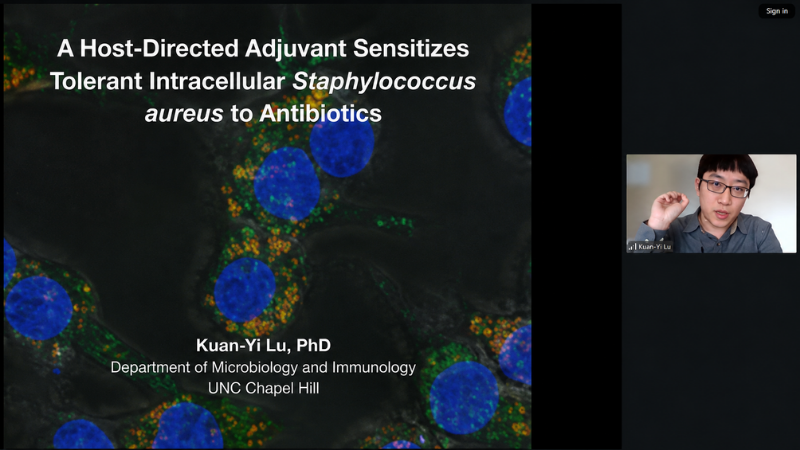
🔴 One of the featured presentations during Session 5 (Day 2) of the 2nd International Virtual Conference on Staphylococci and Staphylococcal Infections 2026 featured Dr. Kuan-Yi (呂冠毅) Lu from the University of North Carolina at Chapel Hill (USA), who delivered an insightful lecture on A Host-Directed Adjuvant Sensitizes Tolerant Intracellular Staphylococcus aureus to Antibiotics.
Intracellular persistence is one of the major challenges in the treatment of Staphylococcus aureus infections. After invading host cells, the bacterium can enter a tolerant physiological state that enables it to survive antibiotic exposure without acquiring genetic resistance. These intracellular bacterial populations are difficult to eradicate because many antimicrobial agents have limited activity within host cells, allowing infection to persist and increasing the risk of relapse. This phenomenon has prompted growing interest in host-directed therapies, which enhance the host’s own antimicrobial mechanisms rather than directly targeting the bacterium. Such strategies have emerged as promising complements to conventional antibiotic treatment.
During his presentation, Dr. Lu discussed the development of a host-directed adjuvant that enhances the effectiveness of antibiotics against tolerant intracellular Staphylococcus aureus. The lecture highlighted how modulation of host cellular pathways can increase bacterial susceptibility to antimicrobial treatment without directly altering the antibiotic itself. By improving intracellular bacterial clearance, this approach offers a promising strategy for overcoming one of the major obstacles in treating chronic and relapsing staphylococcal infections. The work illustrates how combining host-directed interventions with existing antibiotics may provide new opportunities to improve therapeutic outcomes.
Dr. Lu’s research focuses on bacterial persistence, intracellular survival, and host-pathogen interactions. Working in the Conlon Laboratory at the University of North Carolina at Chapel Hill, he combines microbiology, immunology, molecular biology, and therapeutic discovery to investigate why tolerant bacterial populations survive antimicrobial therapy and how host cellular processes can be manipulated to improve bacterial clearance. His research contributes to the growing field of host-directed antimicrobial therapy, which seeks to complement conventional antibiotics by strengthening the host’s ability to eliminate persistent pathogens.
The presentation generated considerable interest among conference participants, highlighting the potential of host-directed therapeutic approaches to address antibiotic tolerance without contributing directly to antimicrobial resistance. Continued research into host-pathogen interactions and intracellular persistence is expected to support the development of innovative treatment strategies capable of improving outcomes for patients with persistent Staphylococcus aureus infections.
Stay connected with StemX Media for more live scientific updates from the conference as leading experts share the latest advances in staphylococcal biology, antimicrobial resistance, host-pathogen interactions, and therapeutic development.
This conference is organized by Impact Research Communications (IRC)
More info: https://staph.ircconferences.net/ | Staphylococcus Science & Therapeutics