Peptidoglycan Hydrolases Against Staphylococcus aureus
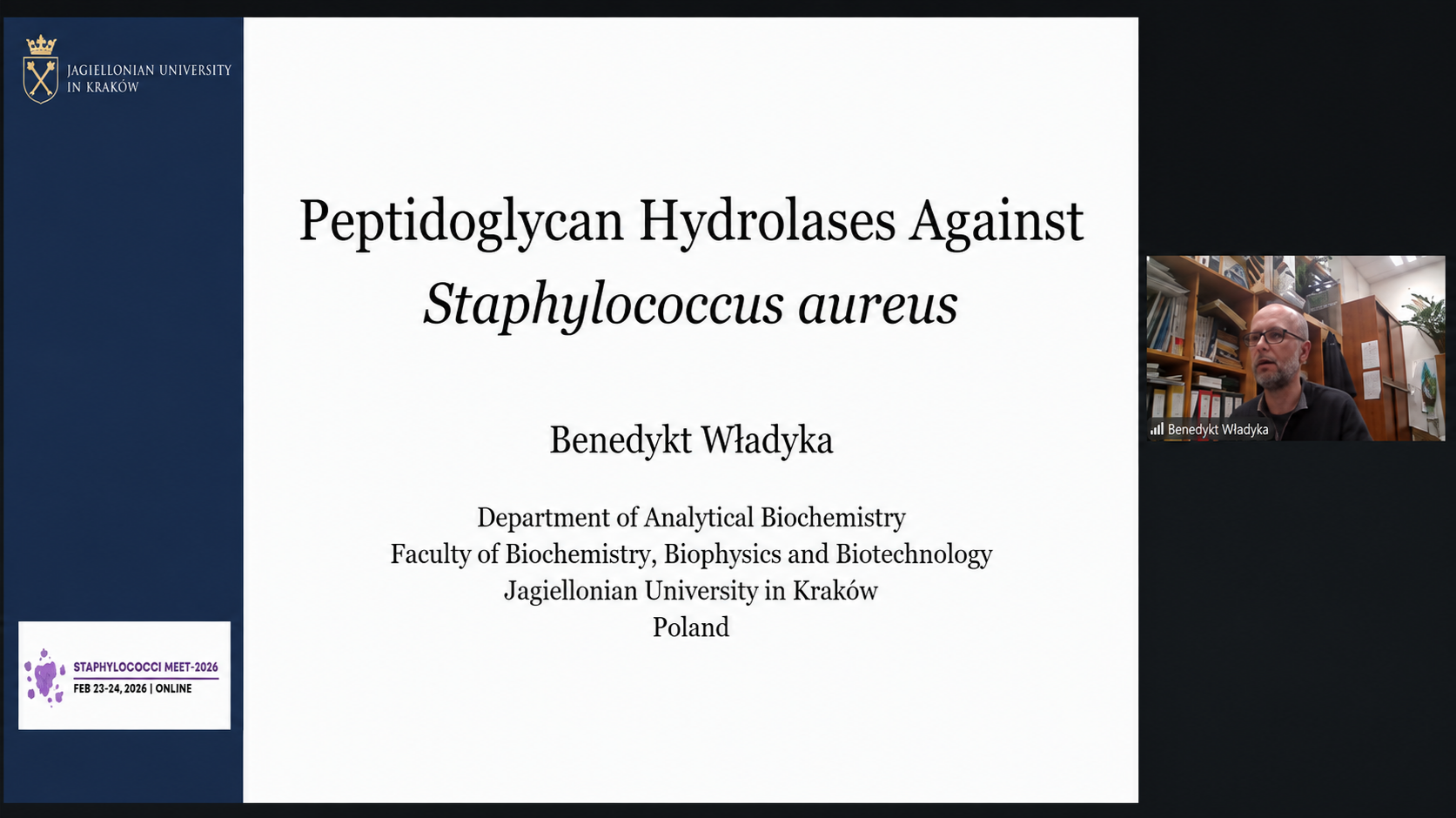
🔴 One of the featured presentations during Session 6 (Day 2) of the 2nd International Virtual Conference on Staphylococci and Staphyloccal Infections 2026 featured Dr. Benedykt Władyka from Jagiellonian University, Kraków (Poland), who delivered an insightful lecture on Peptidoglycan Hydrolases Against Staphylococcus aureus.
The increasing prevalence of antibiotic-resistant Staphylococcus aureus has intensified the search for alternative antimicrobial strategies that act independently of conventional antibiotics. Among the most promising candidates are peptidoglycan hydrolases, enzymes capable of specifically degrading the bacterial cell wall. Because peptidoglycan is essential for maintaining bacterial shape and structural integrity, targeted hydrolysis rapidly weakens the cell wall and can result in bacterial lysis. These enzymes have attracted significant attention as highly specific antimicrobial agents with the potential to combat multidrug-resistant staphylococcal infections while minimizing effects on beneficial microorganisms.
During his presentation, Dr. Władyka discussed the biological properties and therapeutic potential of peptidoglycan hydrolases as anti-Staphylococcus aureus agents. The lecture highlighted how these enzymes recognize and cleave specific components of the bacterial cell wall, providing an alternative mechanism for bacterial killing that differs fundamentally from traditional antibiotics. The presentation also explored how advances in protein engineering and enzymology are supporting the development of hydrolase-based therapeutics capable of targeting resistant S. aureus strains while reducing the likelihood of cross-resistance with existing antimicrobial drugs.
Dr. Władyka’s research focuses on bacterial cell wall biology, antimicrobial enzymes, host-pathogen interactions, and the development of novel anti-infective strategies. His laboratory integrates biochemistry, structural biology, microbiology, and molecular biology to investigate the structure and function of peptidoglycan-degrading enzymes and their application as next-generation therapeutics. Through these studies, his group is contributing to the development of innovative enzyme-based approaches for combating Staphylococcus aureus and other clinically important bacterial pathogens.
The presentation generated considerable interest among conference participants, highlighting the growing importance of enzyme-based antimicrobial therapies in the fight against antibiotic resistance. Continued research into peptidoglycan hydrolases is expected to expand our understanding of bacterial cell wall biology while supporting the development of highly targeted therapeutic strategies for persistent and drug-resistant Staphylococcus aureus infections.
Stay connected with StemX Media for more live scientific updates from the conference as leading experts share the latest advances in staphylococcal biology, antimicrobial resistance, host-pathogen interactions, and therapeutic development.
This conference is organized by Impact Research Communications (IRC)
More info: https://staph.ircconferences.net/ | Staphylococcus Science & Therapeutics