Novel Adjuvants to Re-sensitize MRSA to Antibiotics
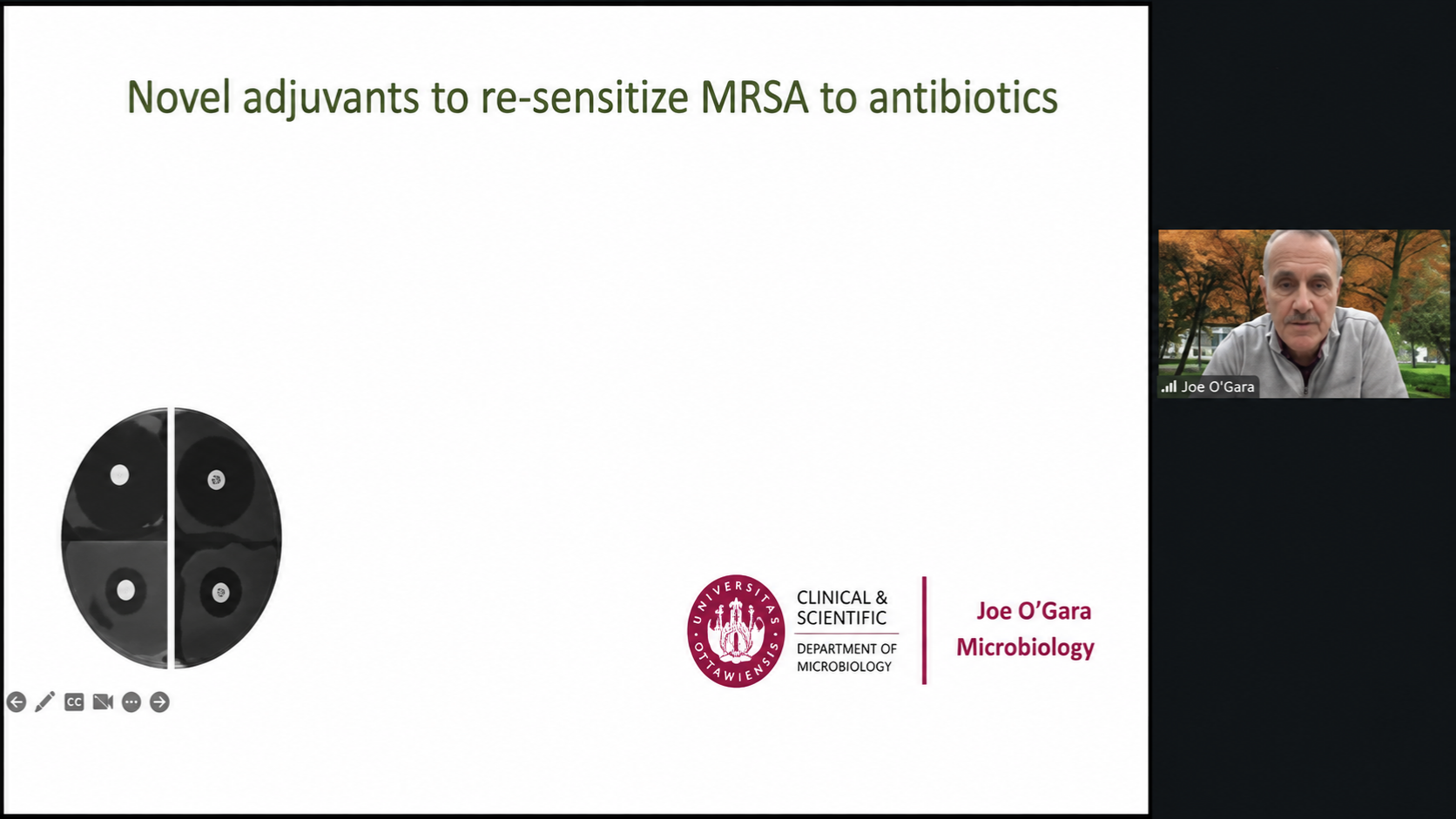
🔴 One of the featured presentations during Session 5 (Day 2) of the 2nd International Virtual Conference on Staphylococci and Staphyloccal Infections 2026 featured Prof. James O’Gara from the University of Galway (Ireland), who delivered an insightful lecture on Novel Adjuvants to Re-sensitize MRSA to Antibiotics.
Methicillin-resistant Staphylococcus aureus (MRSA) remains one of the most significant causes of healthcare-associated and community-acquired bacterial infections worldwide. Although several antibiotics remain effective against MRSA, the continued emergence of multidrug-resistant strains has made treatment increasingly challenging. Rather than relying solely on the discovery of entirely new antibiotics, researchers are now exploring antibiotic adjuvants, compounds that restore or enhance the activity of existing antimicrobial agents by disrupting bacterial resistance mechanisms. This strategy has emerged as a promising approach for extending the clinical usefulness of current antibiotics while slowing the development of resistance.
During his presentation, Prof. O’Gara discussed the development of novel adjuvant strategies capable of re-sensitizing MRSA to antibiotics. The lecture highlighted how targeting bacterial regulatory pathways and resistance-associated mechanisms can improve antibiotic efficacy without directly replacing existing antimicrobial therapies. By weakening the bacterial defenses that contribute to antibiotic resistance, these adjuvant approaches have the potential to restore susceptibility to drugs that have become less effective against resistant S. aureus strains. This work represents an important direction in the ongoing effort to combat antimicrobial resistance.
Prof. O’Gara’s research focuses on the molecular mechanisms that regulate Staphylococcus aureus virulence, biofilm formation, antimicrobial resistance, and stress adaptation. His laboratory combines bacterial genetics, molecular microbiology, genomics, and infection biology to investigate how regulatory networks influence bacterial survival during infection. Through these studies, his group is identifying novel therapeutic targets that could improve treatment outcomes and support the development of innovative anti-staphylococcal strategies.
The presentation generated considerable interest among conference participants, highlighting the growing importance of antibiotic adjuvant therapy as a complementary approach to conventional antimicrobial treatment. Continued research into resistance-modifying compounds and bacterial regulatory pathways may provide valuable opportunities to preserve the effectiveness of existing antibiotics and improve the clinical management of MRSA infections.
Stay connected with StemX Media for more live scientific updates from the conference as leading experts share the latest advances in staphylococcal biology, antimicrobial resistance, host-pathogen interactions, and therapeutic development.
This conference is organized by Impact Research Communications (IRC)
More info: https://staph.ircconferences.net/ | Staphylococcus Science & Therapeutics