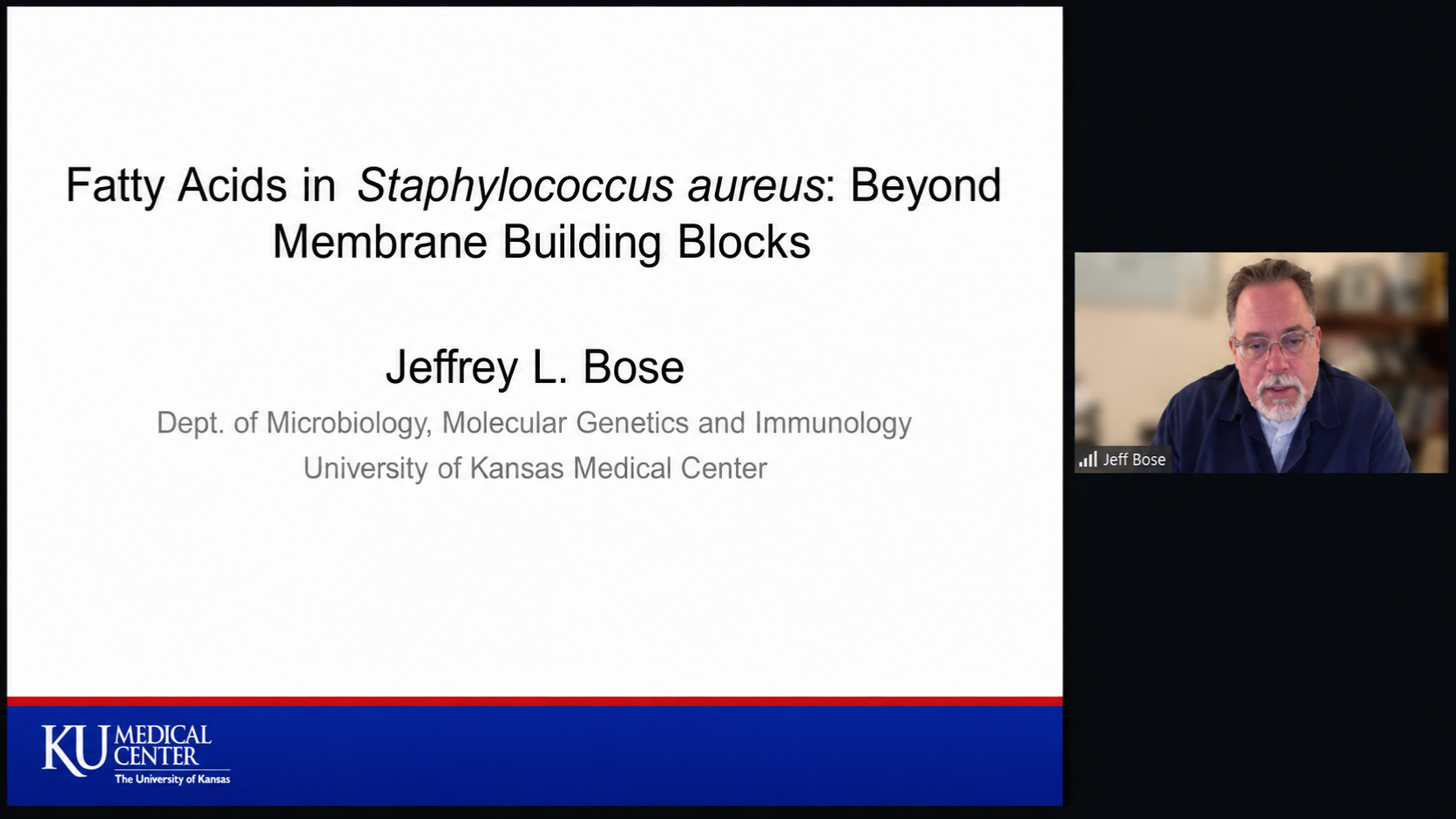
Fatty Acids in Staphylococcus aureus: Beyond Membrane Building Blocks
🔴 One of the featured presentations during Session 4 (Day 2) of the 2nd International Virtual Conference on Staphylococci and Staphyloccal Infections 2026 featured Prof. Jeffrey L. Bose from the University of Kansas Medical Center (USA), who delivered an insightful lecture on Fatty Acids in Staphylococcus aureus: Beyond Membrane Building Blocks.
Fatty acids are traditionally recognized as essential structural components of bacterial cell membranes, contributing to membrane integrity and cellular function. However, research over the past decade has revealed that these molecules play much broader roles in bacterial physiology. In Staphylococcus aureus, fatty acids influence membrane composition, energy metabolism, environmental adaptation, antimicrobial susceptibility, and the regulation of virulence-associated processes. Understanding how S. aureus acquires, synthesizes, and utilizes fatty acids is becoming increasingly important as researchers explore new strategies to combat antimicrobial resistance and persistent infections.
During his presentation, Prof. Bose discussed how fatty acids function far beyond their structural role as membrane building blocks. The lecture highlighted the diverse ways in which fatty acid metabolism influences bacterial physiology, including stress adaptation, interactions with the host environment, and the regulation of pathways that contribute to survival during infection. By examining these interconnected metabolic processes, the presentation demonstrated how lipid biology plays a central role in the ability of S. aureus to colonize, persist, and respond to changing environmental conditions.
Prof. Bose’s research focuses on the metabolism and regulatory networks that govern the physiology and pathogenesis of Staphylococcus aureus. His laboratory integrates bacterial genetics, molecular microbiology, biochemistry, and infection models to investigate how nutrient availability and lipid utilization shape bacterial behavior during infection. Through these studies, his group is identifying metabolic vulnerabilities that may serve as promising targets for the development of next-generation antimicrobial therapies designed to interfere with bacterial adaptation rather than simply inhibit growth.
The presentation generated considerable interest among conference participants, emphasizing the growing recognition that bacterial metabolism is closely linked to virulence and antimicrobial susceptibility. Continued investigation of fatty acid biology is expected to improve our understanding of Staphylococcus aureus physiology and contribute to innovative therapeutic strategies that target metabolic pathways to reduce bacterial persistence and infection.
Stay connected with StemX Media for more live scientific updates from the conference as leading experts share the latest advances in staphylococcal biology, antimicrobial resistance, host-pathogen interactions, and therapeutic development.
This conference is organized by Impact Research Communications (IRC)
More info: https://staph.ircconferences.net/ | Staphylococcus Science & Therapeutics