Novel Mechanisms of Impaired Staphylococcus aureus Clearance by Neutrophils in Cystic Fibrosis
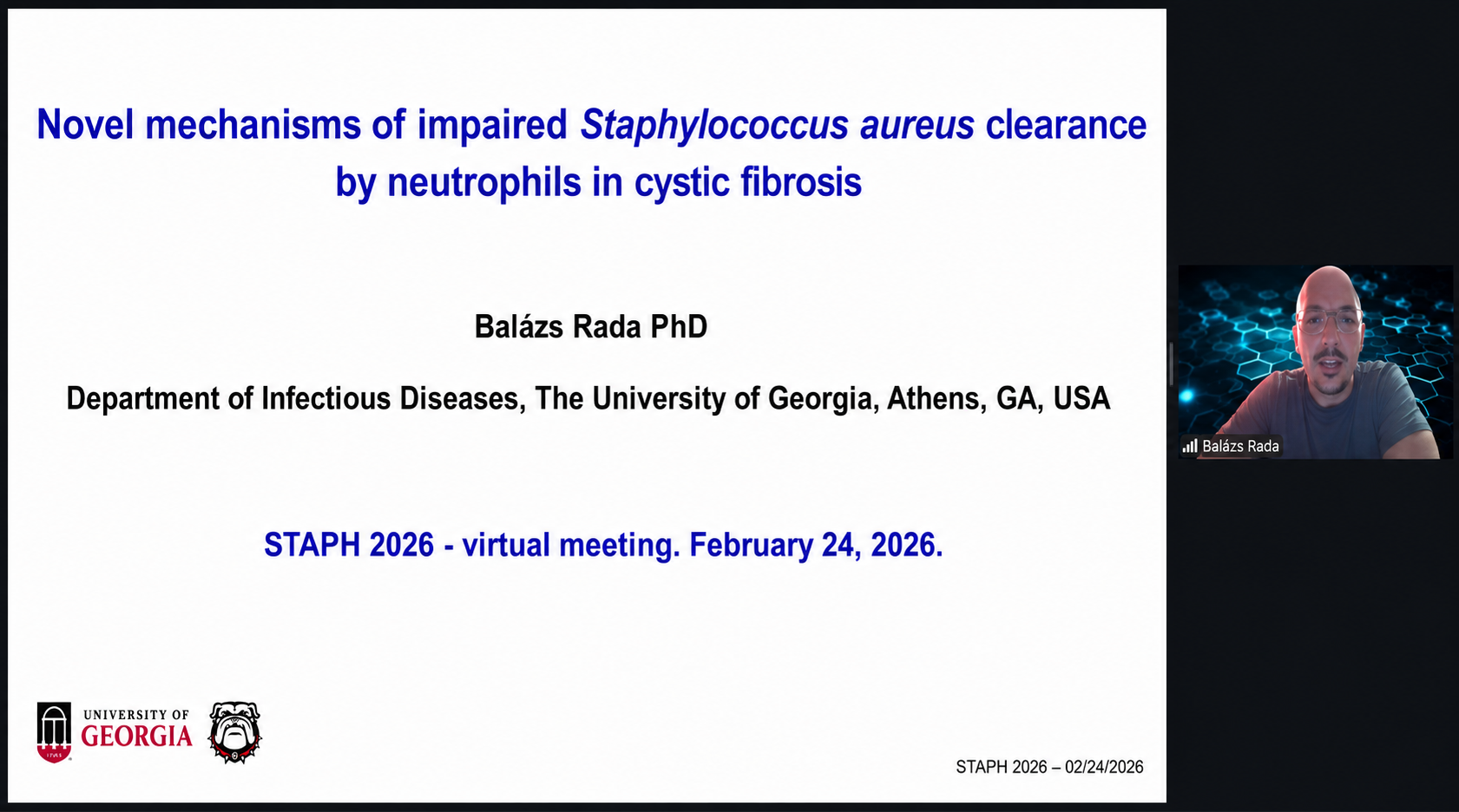
🔴 One of the featured presentations during Session 4 (Day 2) of the 2nd International Virtual Conference on Staphylococci and Staphylococcal Infections 2026 featured Dr. Balázs Rada from the University of Georgia (USA), who delivered an insightful lecture on Novel Mechanisms of Impaired Staphylococcus aureus Clearance by Neutrophils in Cystic Fibrosis.
Cystic fibrosis (CF) is a hereditary disorder characterized by chronic lung inflammation and persistent bacterial infections that progressively damage the respiratory system. Among the pathogens frequently isolated from individuals with CF, Staphylococcus aureus is one of the earliest and most prevalent colonizers. Although neutrophils are the first line of innate immune defense against bacterial invasion, their antimicrobial functions become dysregulated within the CF airway. Instead of efficiently eliminating pathogens, neutrophils often contribute to persistent inflammation while failing to completely clear bacterial infections. Understanding the mechanisms responsible for this impaired bacterial clearance is essential for developing more effective therapies for chronic respiratory disease.
During his presentation, Dr. Rada discussed newly identified mechanisms that impair the ability of neutrophils to eliminate Staphylococcus aureus in cystic fibrosis. The lecture explored how alterations in neutrophil function influence bacterial survival within the inflamed airway and contribute to chronic infection. By examining the molecular pathways that regulate innate immune responses, the presentation provided valuable insight into why S. aureus persists despite the presence of large numbers of immune cells and highlighted potential opportunities for restoring effective antimicrobial defense.
Dr. Rada’s research focuses on neutrophil biology, mucosal innate immunity, and host-pathogen interactions in chronic inflammatory diseases. His laboratory integrates immunology, microbiology, and translational disease models to investigate how defects in innate immune function influence susceptibility to bacterial infections. A major objective of his research is to identify host-directed therapeutic strategies that improve neutrophil antimicrobial activity while reducing excessive inflammation, an approach that could benefit patients with cystic fibrosis and other chronic infectious diseases.
The presentation generated considerable interest among conference participants, highlighting the importance of understanding immune dysfunction alongside bacterial pathogenesis in chronic respiratory infections. Continued investigation of neutrophil biology is expected to support the development of innovative host-directed therapies that complement conventional antimicrobial treatment and improve outcomes for patients living with cystic fibrosis and persistent Staphylococcus aureus infections.
Stay connected with StemX Media for more live scientific updates from the conference as leading experts share the latest advances in staphylococcal biology, antimicrobial resistance, host-pathogen interactions, and therapeutic development.
This conference is organized by Impact Research Communications (IRC)
More info: https://staph.ircconferences.net/ | Staphylococcus Science & Therapeutics