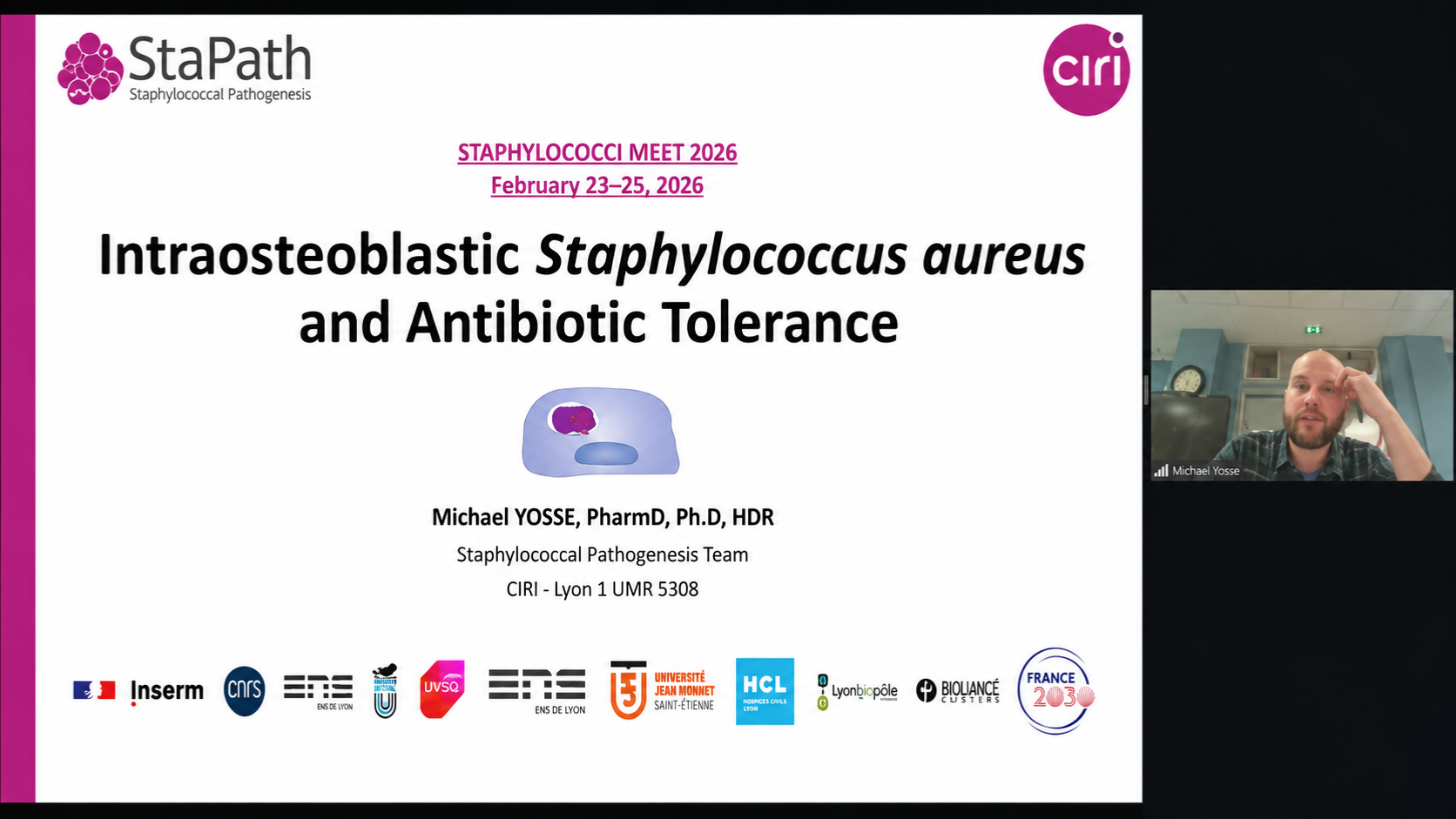
Intraosteoblastic Staphylococcus aureus and Antibiotic Tolerance
🔴 One of the featured presentations during Session 2 of the 2nd International Virtual Conference on Staphylococci and Staphylococcal Infections 2026 featured Dr. Jérôme Josse (PharmD, PhD, HDR) from the Centre International de Recherche en Infectiologie (CIRI), France, who delivered an insightful lecture on Intraosteoblastic Staphylococcus aureus and Antibiotic Tolerance.
Bone and joint infections caused by Staphylococcus aureus remain among the most difficult bacterial infections to treat because the pathogen is capable of invading osteoblasts, the bone-forming cells responsible for maintaining skeletal tissue. Once inside these cells, S. aureus can persist in an intracellular state that is less accessible to both the host immune system and many antimicrobial agents. This intracellular reservoir is considered an important factor contributing to chronic osteomyelitis, recurrent infections, and antibiotic treatment failure. Understanding how S. aureus survives within osteoblasts is therefore essential for improving the management of bone infections and developing more effective therapeutic approaches.
During his presentation, Dr. Josse discussed the biological mechanisms that allow S. aureus to establish long-term persistence inside osteoblasts and the relationship between intracellular survival and antibiotic tolerance. The lecture highlighted how intracellular bacterial populations can adopt physiological states that reduce susceptibility to antimicrobial therapy while continuing to survive within bone tissue. These findings contribute to a deeper understanding of why conventional antibiotic treatment may successfully eliminate extracellular bacteria while leaving intracellular reservoirs capable of driving relapse.
Dr. Josse’s research focuses on host–pathogen interactions during bone and joint infections, with particular emphasis on intracellular S. aureus, osteomyelitis, and antimicrobial tolerance. His work combines microbiology, cell biology, and clinically relevant infection models to investigate how bacterial persistence influences disease progression and therapeutic response. Recent studies from his group have provided important insights into the dynamics of intracellular bacterial populations and their role in chronic bone infections, helping to identify new directions for future antimicrobial strategies.
The presentation generated significant interest among conference participants, highlighting the growing importance of intracellular persistence as a key factor in staphylococcal pathogenesis. Continued research into host–pathogen interactions within bone tissue is expected to support the development of improved therapeutic strategies capable of eliminating persistent bacterial reservoirs and reducing the burden of chronic osteomyelitis.
Stay connected with StemX Media for more live scientific updates from the conference as leading experts share the latest advances in staphylococcal biology, antimicrobial resistance, host–pathogen interactions, and therapeutic development.
This conference is organized by Impact Research Communications (IRC)
More info: https://staph.ircconferences.net/ | Staphylococcus Science & Therapeutics