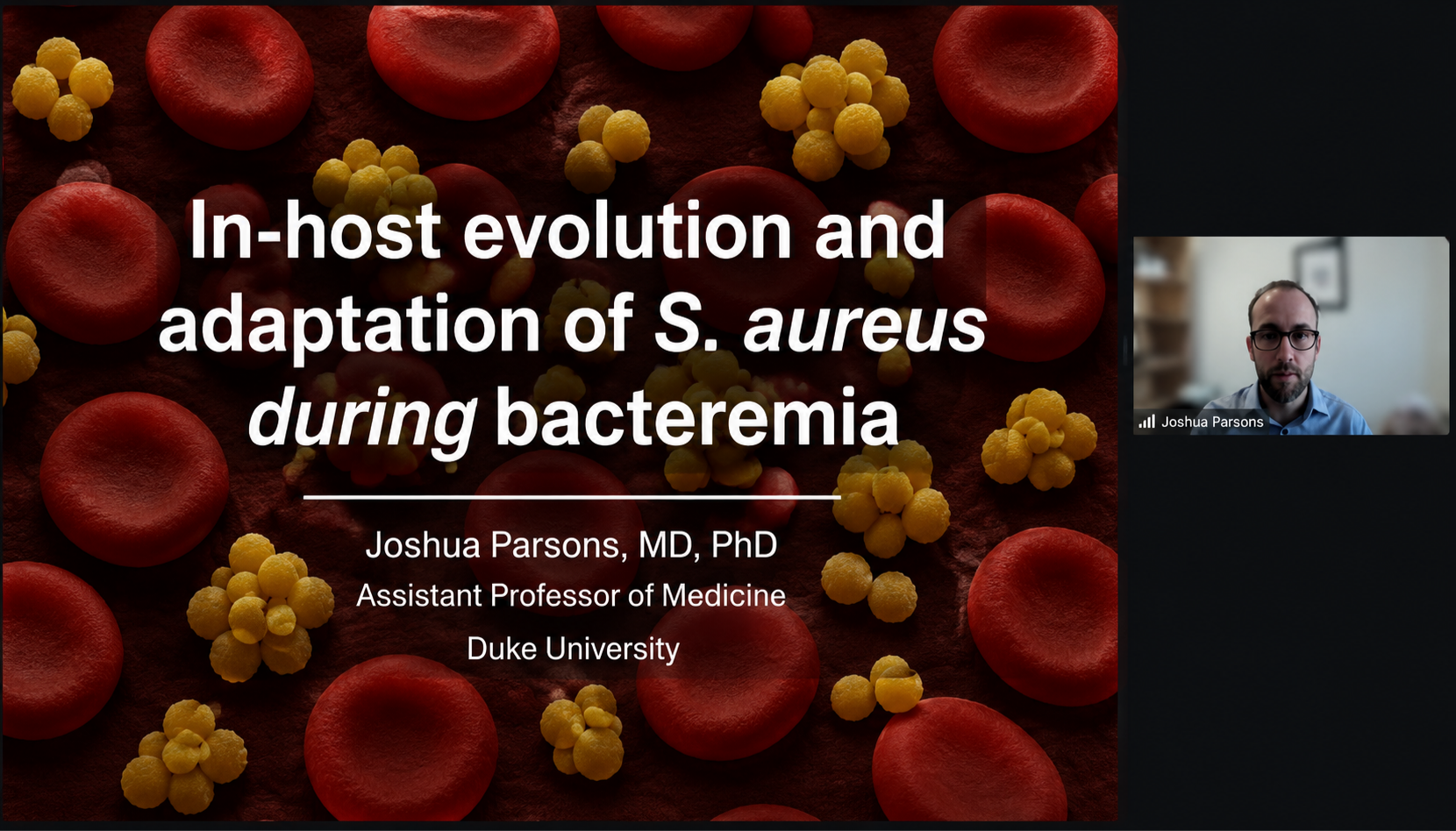
In-host Evolution and Adaptation of Staphylococcus aureus During Bacteremia
🔴 One of the featured scientific sessions at the 2nd International Virtual Conference on Staphylococci and Staphylococcal Infections 2026 featured Dr. Josh Parsons (MD, PhD) from Duke University Health System (USA), who presented an insightful lecture on the in-host evolution and adaptation of Staphylococcus aureus during bacteremia.
Staphylococcus aureus bacteremia remains one of the most serious bacterial bloodstream infections encountered in clinical medicine, with high rates of morbidity and mortality despite the availability of effective antimicrobial therapy. Once the organism enters the bloodstream, it is exposed to intense selective pressures from the host immune system and antibiotic treatment. These pressures can drive rapid genetic and phenotypic adaptation, allowing bacterial populations to persist, evade immune responses, and, in some patients, contribute to prolonged or recurrent bloodstream infections. Understanding these adaptive processes is critical for improving patient management and developing more effective therapeutic strategies.
During his presentation, Dr. Parsons discussed how S. aureus evolves within the human host during bacteremia and the biological mechanisms that enable bacterial populations to adapt over the course of infection. His presentation highlighted the importance of genomic changes that arise during invasive disease and how these evolutionary events may influence bacterial persistence, virulence, antibiotic response, and clinical outcomes. By integrating clinical observations with microbial genomics, this work provides valuable insight into the dynamic relationship between pathogen evolution and disease progression.
Dr. Parsons’ research focuses on understanding the genomic determinants that influence treatment failure in S. aureus bloodstream infections. His work combines whole-genome sequencing, large clinical isolate collections, and experimental infection models to identify bacterial genetic signatures associated with antibiotic response and patient outcomes. These investigations are expected to improve risk prediction, support precision infectious disease management, and identify novel targets for future antimicrobial therapies.
The presentation generated significant interest among conference participants, highlighting the growing importance of studying bacterial evolution during infection rather than viewing pathogens as genetically static organisms. Understanding how S. aureus adapts within individual patients may ultimately support improved diagnostics, more personalized treatment strategies, and better outcomes for patients with severe bloodstream infections.
Stay connected with StemX Media for more live scientific updates from the conference as leading experts share the latest advances in staphylococcal biology, antimicrobial resistance, host–pathogen interactions, and therapeutic development.
This conference is organized by Impact Research Communications (IRC)
More info: https://staph.ircconferences.net/ | Staphylococcus Science & Therapeutics